What are the implications of this over-reaching, global institutional network for national sovereignty and the international health security agenda? World Council for Health releases two new reports…
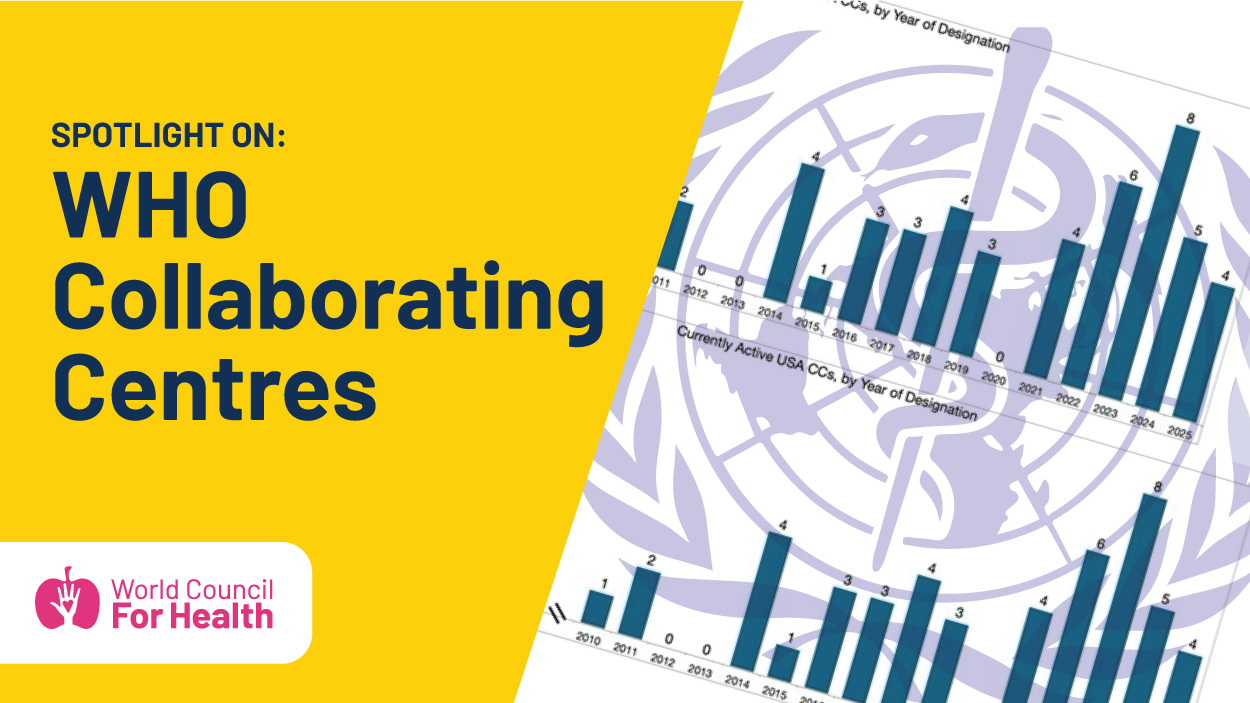
World Council for Health has uncovered a network of World Health Organization (WHO) Collaborating Centres operating in many countries worldwide, including the US, the UK and Australia, which are institutions designated by the WHO to advance its mandates and agendas. There are currently 827 WHO Collaborating Centres worldwide.
Despite the US exiting the WHO, there are still 70 active WHO collaborating centres in the country. So, exiting WHO is not enough. Through its “collaboration” tentacles, WHO maintains influence and control regardless of whether a country is in or out of the WHO.
These centres undertake a wide range of activities that extend well beyond the limited examples described in WHO guidance and clearly, they are not fringe organisations. They are universities, hospitals, regulatory agencies, health ministries, national laboratories, military and bioweapons facilities, charities, and health professional training bodies – all formally designated by the WHO Director-General to advance WHO mandates and WHO agendas within their host countries. These are WHO tentacles embedded in institutions we continue to fund with our taxes.
These centres cover an extraordinary range of functions: pandemic and emergency response, pathogen research and storage, vaccine development and patents, diagnostic testing, diagnostic coding, gender and sex education in schools, water, food, e-health, healthy cities, male contraception research and development, and the education of nurses and midwives. And their work plans are confidential.
The attached reports, which are the result of more than two years of investigation, highlight the broad scope of subjects covered by US WHO CCs, including global health policy, climate change, cancer, malaria, nursing, mental health, tobacco control, ageing, violence prevention, and human rights. The most common focus areas are health systems research and development, emergency and humanitarian action, health information statistics, and nursing.
There appears to be a strong reciprocal influence between the United States and the WHO, particularly regarding the global health security agenda. These reports highlight the extensive institutional network and raise concern about national sovereignty, both for the United States and for other countries that adopt WHO guidance and policies.
Read the reports:
USA: Collaborating Centres Report
https://wchweb.b-cdn.net/Web%20Content/WHO%20CCs/usawhoccsoverviewreport26jan2026.pdf
UK: Collaborating Centres Report
https://wchweb.b-cdn.net/Web%20Content/WHO%20CCs/ukwhoccsoverviewreport23jan2026.pdf
More about WHO Collaborating Centres