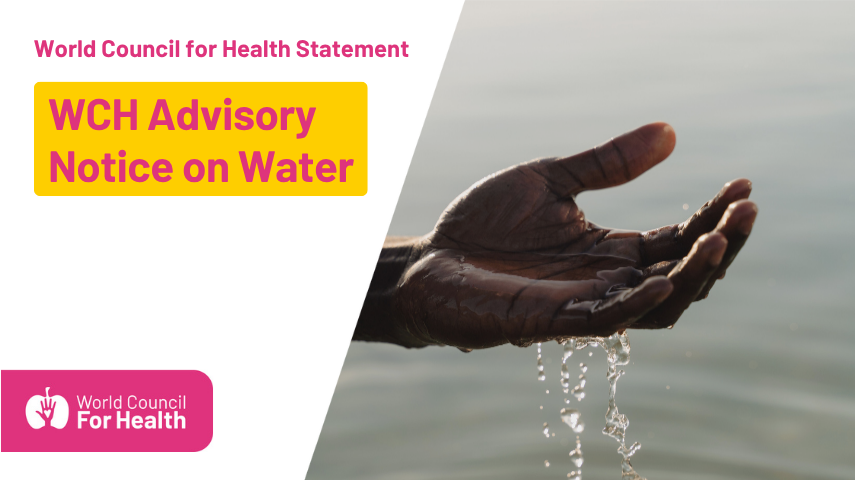
A statement from World Council for Health
World Council for Health is increasingly concerned about the impact that droughts, flooding, fires, earthquakes, war, weather modification and geoengineering, and data centres may have on access and quality of drinking water. World Council for Health recommends that households and communities take practical steps now to maintain access to safe water in case of disruption.
Our essential recommendation
Every household should maintain a minimum two-week reserve of safe drinking water.
As a practical preparedness standard, allow at least 5 litres per person per day for drinking and basic food preparation.
This means a minimum reserve of:
- 1 person: 70 litres
- 2 people: 140 litres
- 4 people: 280 litres
- 6 people: 420 litres
This reserve is for drinking and essential food preparation. Additional water should be secured for hygiene, sanitation, washing, animals and food production wherever possible.
Build household resilience
We recommend that households:
- Keep a permanent supply of sealed glass-bottled drinking water.
- Purchase and maintain suitable food-grade water-storage containers.
- Maintain a reliable means of making water safe, including water filters and distillers, chlorine dioxide water purification tablets/solutions.
- Have mechanisms to harvest rainwater where possible.
- Consider larger tanks, such as intermediate bulk containers (IBCs) or appropriately constructed ponds for irrigation and other non-potable uses.
A lined pond can provide valuable resilience for gardens and food production. Even a modest property may be able to capture substantial rainfall in a properly designed storage pond or tank. Solar-powered water treatment, including reverse osmosis where appropriate, may provide an additional means of producing potable water from suitable sources.
Awareness of other emergency water sources
WCH recommends that you are familiar with water resources in your local environment, including springs, fountains and rivers. In an emergency, up to 10 litres of potable water may be recoverable from a toilet cistern, provided the cistern is clean, has not contained chemical treatment products and the water has not otherwise been contaminated. Always aim to clean or filter water from emergency sources before using.
There is a better way. When it comes to the essence of life – clean drinking water – it is better to be safe than sorry.
Additional Resources
- PREPPING: You Can Never Be Too Prepared, But You Can Be One Day Too Late – PART 1: drtesslawrie.substack.com/p/prepping-you-can-never-be-too-prepared-171
- How safe is your drinking WATER?: drtesslawrie.substack.com/p/is-a-hose-pipe-ban-all-you-need-to